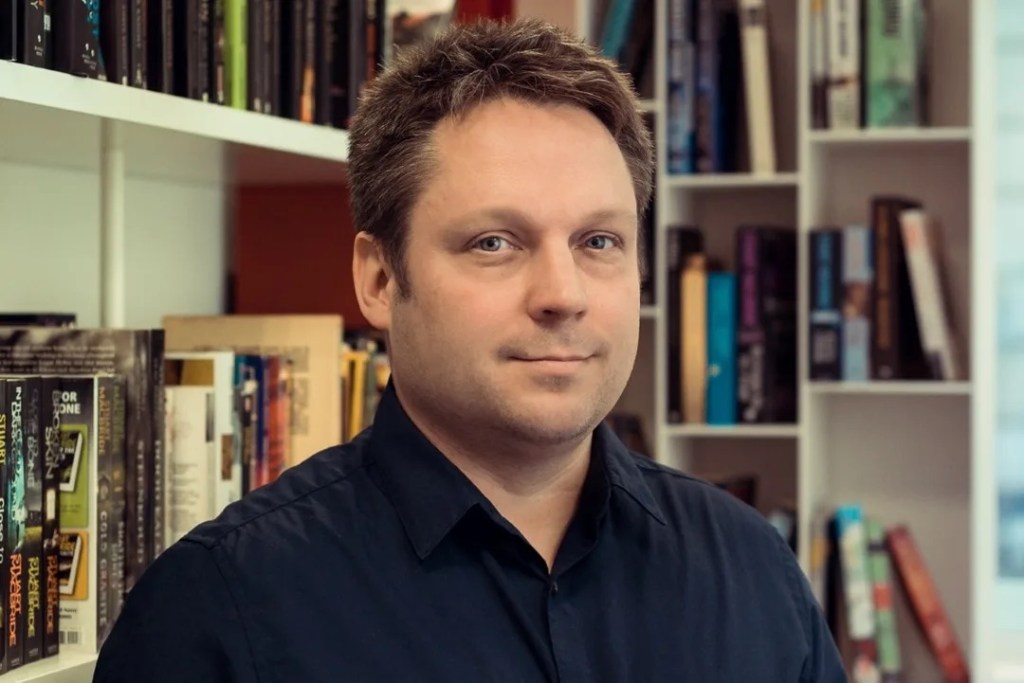
Hi everyone, this afternoon on the blog I’m delighted to continue the My Editing Approach With series of interviews by welcoming Phil Patterson from Marjacq, a London based literary agency.
What does the editing approach look like from an agent perspective? Let’s find out.
Over to you, Phil…
1) When you receive an author’s full manuscript for the first time, what kind of hat do you wear when you read it?
I get 20 submissions per day so I have to work out which might be viable as a commercial proposition Most will not be, I am afraid, so I will put those to one side and then take a closer look at the ones that look interesting.
I will be reading it critically and hopefully be reading it and enjoying it as any reader would. But if it is something that I feel that I could not place or is okay but would take a lot of work it would probably be a pass.
If there is a spark in there and I think it is close to being something that could interest a publisher or the writing is good then I am hooked.
2) When you have finished the manuscript, what is your immediate thought process? Are you thinking ‘I know exactly what this book needs’?
Most of the submissions will be a short sample. If I like that and I want it read on then I will call it in.
I might have initial ideas of what the book needs but depending on the work it might take a bit of thinking about it. I might get an idea walking the dog or it might come to me later. Or if I am lucky, it might not need much work and I can see it as a potential published novel.
3) What exactly is an edit letter that you send to an author? How is this written? Do you do a number of them back and forth with them or a detailed and descriptive one?
This purely depends on the author and the work and how much work is needed. You might send an overview with broad notes on what to change. Then break it down into what could be changed. Then you might do a marked up manuscript.
Or you have a situation like an author I had whose work was good but there was no dynamic between his main characters. His two leads in a police procedural had no life to them. No real point of difference.
I said why don’t you make your other copper a woman and make her different from her boss. That fixed it. It was not much more than that but the author pulled the character apart, based his female copper on someone he knew and it worked.
4) What is your favourite type of editing to do with a manuscript? A big picture edit? A structural edit to tackle the building blocks of the manuscript, or a copy edit or a line edit?
I think I like to do the bigger picture stuff more. I don’t have the level of training that an editor at a publishing house has, where they are increasing taught a house style. That is not to say they are all the same but there is a methodology. Obviously if you have parts where nothing is happening or the third act falls apart you can deal with that. I am less obsessed with a detailed line by line edit.
The writer should be able to judge for his or herself where those beats fall. If things leap out like repetition or phrases or bad continuity in the plotting you can spot those. You want a manuscript to be as good as you can get it, but once an editor gets hold of it, there is likely to be more notes, more suggestions, more fixes.
5) How do you match the author with the right editor for their manuscript? What feeling do you get when you get to tell an author that their book will be published, after all their hard work?
You have an idea of editors tastes, what they have on their list and what they are after. People’s tastes and focus change but it gives you a reasonably good idea of what potential editors are looking for. It involves keeping in touch with everyone, meeting up and coming editors and getting a sense of who is after what. You do think about the alchemy between writer and editor and sometimes you might think they would work well together. You might have an author who is fairly experienced and you wouldn’t want an editor to go to town on the book to make changes for changes sake. That is not to say a fresh eye on a seasoned author cannot work wonders.
But you don’t want an editor who is trying to write the author’s book. Mercifully there are not many editors like that but once or twice youget a situation where this happens and it is a tough situation to deal with.
You want your client to be happy and trust the judgement of his or her editor and you also don’t want to ake the editor feel like their professional reputation is being impugned. It is the trickiest relationship in publishing because you want them to get each other, trust each other and listen to each other. And be that advocate in house to push the book with sales, marketing, etc and make it a success.
If that breaks down then you have problems.
6) What is the feeling like for you when your author has their publication day and you see your name in the acknowledgments of their manuscript?
I love seeing any of my authors get published. Small deals or big deals, it is a brilliant feeling. It’s always nice to get a thank you on print!
Thank you so much for your time this afternoon, Phil. It has been a pleasure to interview you.
Bio: Philip heads the book department at Marjacq. He joined in 2003 from Curtis Brown where he was a film, television and theatre agent. Before that he worked for HarperCollins Publishers.
He represents adult fiction and non-fiction.
He is on the look out for thrillers, commercial fiction, historical and literary fiction, and narrative non-fiction on history, natural history, politics and military. He likes good stories and writers who know how to tell them.

