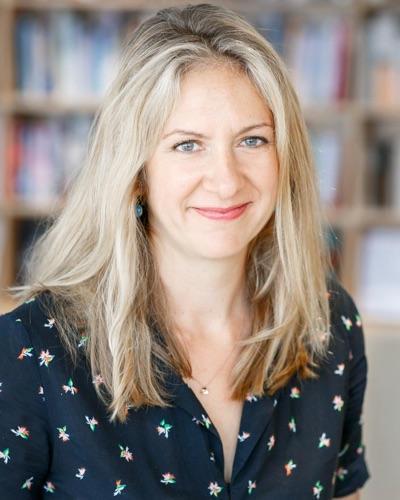
Hi everyone, and today on the blog I’m delighted to welcome Stephanie Glencross. Stephanie is a literary agent at David Higham Associates and first started her career in production at the BBC, before making the move to an in house editor for Jane Gregory at Gregory and Company.
A link to Stephanie’s agent page and what she is looking for are below the Q&A.
Over to you, Stephanie…
1) Did you always want to be a literary agent when you left school? Did you have any other career plans?
To be honest I had no idea about the role of a literary agent when I left school! I did know that I wanted to work with books, so I had publishing in mind as a career. I studied History at University and worked for a small newsletter publishing company when I graduated.
I was then offered a role as assistant to the Production Executive at the BBC Radio Drama Dept and from there moved to the Story Department at EastEnders. This was a lot of fun but also very intense and my next step would have been a script editor but at the time there wasn’t much being made in Britain that excited me so I turned back to books.
I saw an advert for the inhouse Editor at Gregory and Company Authors’ Agents, where Jane Gregory represented mainly crime and thriller authors – such as Val McDemid, Mo Hayder and Minette Walters.
As I have always been obsessed with crime fiction, I begged Jane to let me do work experience for whoever was hired and instead she called me in for an interview. I worked with Jane for a few years until she merged with DHA. I moved with her and when she retired, I became an agent myself. So I am now absolutely thrilled to be building my own list of crime/thriller and ‘dark’ commercial/book club fiction.
2) What does a typical day in the life of a literary agent look like for you?
Day to day life as a literary agent varies a lot. I can be putting contracts on our system; chasing payments; having meetings with editors at publishing companies, or with authors, or with colleagues – DHA has a foreign rights department and a screen rights department and we all work closely together on my list.
I can be drawing up a submission list ready to send something out, then putting together my submission package. I can be dealing with author queries about all sorts of things – like collaborations with artists on their work, or book launches or brainstorming titles.
I can be holding an auction for a manuscript and negotiating the contract, or I can be reading submissions, calling in full manuscripts and editing the manuscripts that I’m sending out on submission in due course.
Sometimes there’s a fair amount of admin to deal with – like sending tax forms to foreign publishers. Sometimes I’ve offered representation to someone who has other offers too and I’m part of a ‘beauty contest’ – where the author meets the agents and makes a decision. I can be helping to assist authors with issues that come up with their publishers, or discussing ideas for future books and helping to guide a strategy.
3) What makes you ultimately fall in love with a submission? Is it the author’s voice? Is it characters you can’t stop thinking about? What makes you say yes?
I’d say what ultimately makes me fall in love with a submission is when I find something that feels a little different, for whatever reason – some quality in the setting, voice, structure, perspective or concept that makes me intrigued and then is followed through.
The author’s voice and characters are definitely a huge part of that. When I am excited by the pitch and then drawn in by the execution, it’s normally a highly successful combination!
4) If you have asked to see a full manuscript, what would make you ultimately say no? Would you ask to see a resubmission at all?
I think what would ultimately make me say no is if it didn’t deliver on the expectations.
It’s like if you read the blurb of a book and then read it and feel like it didn’t quite hit the spot – some examples of elements here would be the plot being predictable, characters being one-dimensional.
I do sometimes ask to see a resubmission and in those cases, I would give some advice or suggestions but I am always very clear that if the author chooses to take them up it’s important that they want to do this anyway to make the ms stronger, because I can’t guarantee I’d move forward with the submission when it’s sent back.
It’s awful for everyone if the author does a lot of work and there’s an expectation that they’ll be signed and then it doesn’t quite come together.
5) Once you have offered representation, what is the meeting like with the author, from your perspective?
From my perspective, I try to gauge a sense of what the author is like while we are emailing before I offer representation. In an ideal world I’d ask them for a meeting and then offer once I was happy that we both connected on important things like the author’s ambitions, future writing, editorial expectations etc.
But sometimes the situation doesn’t allow for this and I offer first! The meeting is in many ways a chemistry test – that feeling that you mutually feel you’re aligned and are excited to be working together.
6) How do you go about the editing process for a manuscript, pre publication pitch? What does the agent’s editing approach look like for you?
As I have been an editor this is a part of the role I particularly enjoy. I love shaping and honing my clients’ work. I usually start with a ‘structural edit’ – addressing big picture items like how it hangs together structurally; character arcs; plot holes; pace; looking at the beginning, middle and end and also the five act structure. Checking that motivations work and that twists are landing in the right places.
The process from that point ideally starts to narrow in focus with each subsequent draft until we’re looking at line edits. At the end of the day we are ready when we are both happy that it is as strong as it can be.
7) How do you prepare for pitching a manuscript to publishers and do you ever get nervous?
I first put together my submission email – which includes the pitch, an outline, comps and where I would place it. I talk about the elements that drew me to the manuscript and why I think it is an enticing proposition for them.
There will be some information on the author and the next novel (if applicable) and which rights are on offer. I then think carefully about who might be a good match for the manuscript, which editors have said they’re looking for something like this, looking back at meetings I have had with editors and my notes on those meetings.
Of course, I also submit to editors who might not know they’re looking for this precise manuscript so it’s about being aware of the different editors and the different imprints and getting a sense of people’s tastes but also sometimes giving them something they find intriguing (hopefully for the same reasons I did!).
I then draw up a submission list, and if you have more than one submission out at the same time it can involve judicious planning so that you’re not sending an editor more than one, and making sure there is a bit of space. And I always get nervous! I take on authors and projects that I care about and I really want them to land well!
8) Do you have any advice for the unpublished author seeking representation?
Do make sure you really sweat over your submission email. This is the moment you’re presenting your idea and work to agents and there’s definitely an art to a really persuasive submission email.
Do follow the requirements on the agency website and/or the agents webpage. State what the genre is and word count, follow with a short hook/ elevator pitch and then a concise outline of the story. For me it’s helpful to set out who your main character is and what their central dilemma is, and what stakes there are. Follow with a little about yourself – including any biographical information that is relevant.
Strong submission emails also have a sense of your voice and personality in there without overdoing it! If you can say why you’re submitting to that particular agent I think this can be helpful – is there something in your book that resonates with their wish list for example, or clients you admire? Do you think your work might bring something different to their list?
Then attach your synopsis and first three chapters (or check what the agency asks for) and remember that the outline in the main body of the email isn’t a duplication of the synopsis – it’s a little more like the blurb on the back of a book.
9) What was the last book you read, that wasn’t one of your clients, and what first attracted you to it?
The last book I read that wasn’t one of my clients was Fenwomen by Mary Chamberlain, which is a reissue of a portrait of women in an English village in the fens. It’s a fascinating oral history. I read it because we often stop in Ely when travelling to Norfolk, and there’s a great museum there that really makes me think about the area.
The most recent book I read that is closer to my own work was Room 706 by Ellie Levenson, which I was drawn to by its great concept – a happily married woman stuck in a hotel room with the man she is having an affair with, while terrorists seize the hotel.
10) Lastly, what is a typical weekend for you? And what do you enjoy doing outside of your job?
I have three sons and two dogs, so my weekends are often spent walking in woods, attending various different sports sessions or matches and enjoying my husband’s cooking!
I like to read submissions in the spaces around family life so my Kindle comes with me a lot, and I know when something is really pulling at me when I just want to get back to it all the time.
Thank you for your time today, Stephanie. It has been a pleasure to interview you.
Bio:
I joined DHA in 2018, having previously been the Editor at Gregory & Company Authors’ Agents where I worked alongside Jane Gregory, helping to build the list of clients and working with the authors. I’m proud to have edited many award-winning authors including Val McDermid, Mo Hayder, Catherine Ryan Howard, Paula Daly, Tan Twan Eng and Belinda Bauer. I bring a lot of editorial experience to my agenting and love being involved in the editorial process with the authors I represent.
Before I became an editor I was at the BBC for a few years, first in the Radio Drama department then in the Story Department of EastEnders. During that time I learned an enormous amount about the power of characterisation and the construction of cliffhangers . . .
I was privileged to be a judge on the CWA Debut Dagger Award for several years and continue to have a love affair with crime fiction that started with Nancy Drew and was nurtured by Sara Paretsky, Patricia Cornwell and Michael Connelly.
ON THE LOOKOUT FOR
I am particularly on the look out for stories that are dark, juicy, and compulsive – accessible, gripping reads that still feel smart and a little unexpected. I love high-concept psychological suspense, clever mysteries, and thrillers driven by momentum and voice.
I’m interested in characters with deep personal stakes, and propulsive, twisty narratives. I tend to gravitate towards standalones that feel complete and satisfying but have the potential to grow if readers want more.
More broadly, I’m excited by crime and thriller that plays confidently with familiarity – nostalgia, recognisable frameworks, classic commercial DNA – but pushes into darker, sharper, more emotionally complex territory. Above all, I prioritise an incredible reading experience: books that are immersive, absorbing, and almost impossible to put down! Smart, character-led thrillers with bite.
Stephanie’s Agent Page:

