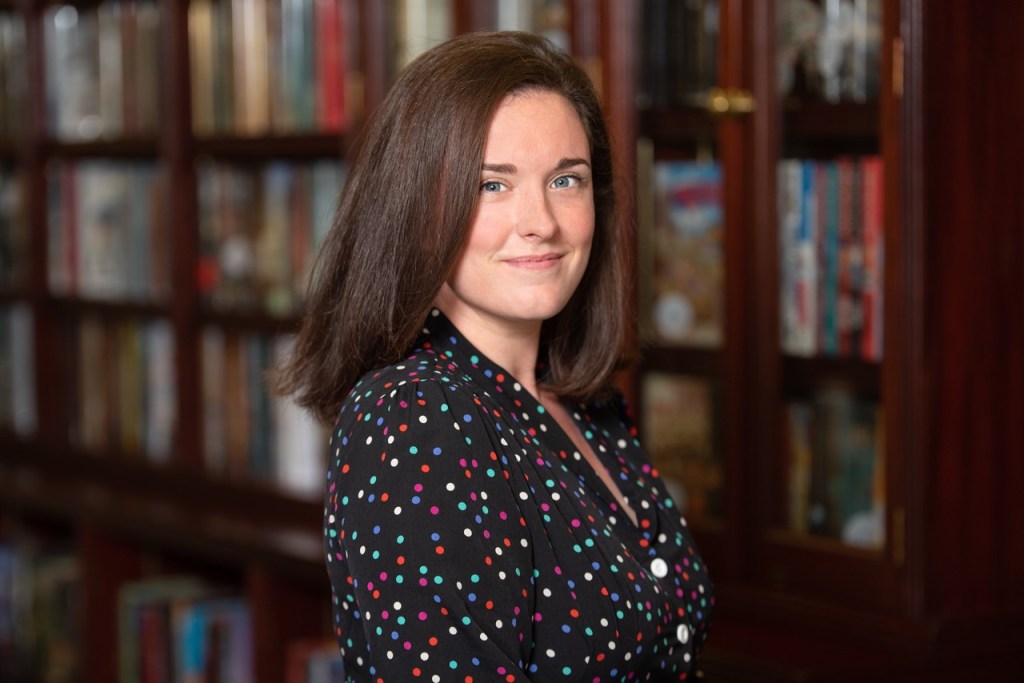
Hi everyone, and this afternoon on the blog, I’m delighted to welcome Emily Glenister. Emily is a Director and Literary Agent at DHH Literary Agency. I was delighted when she agreed to come on the blog to chat about her career from actress to literary agent.
Over to you, Emily…
1) You first trained to be an actress at Bristol Old Vic Theatre School. What was your experience of the course like and did you enjoy it?
Since I was a little girl, it was kind of on the cards that I’d go in to the “family business” and become an actress. I loved performing and having an audience! Went the time came to audition for drama school, I went through the whole process of 1st rounds, 2nd rounds, rejections etc.
I actually got rejected from everywhere but with Bristol Old Vic, I got waitlisted, so I just assumed I wasn’t going to drama school that year. Then I got a call that someone had dropped out and I was first on the waitlist, so I packed up my belongings and said goodbye to my family and boyfriend and moved to Bristol in about 48 hours. The experience of drama school was very up & down.
I had some incredible highs and some truly all-time lows. You’re often cast to type, so because I was pretty curvy and not conventionally pretty, I was given the mumsy or dowdy roles, which aren’t great for the old confidence. I did, however, make some firm friends for life and even though I didn’t stay an actress, it was worth it for that alone. Drama school isn’t for everyone, and I totally get why – it really can make or break you!
2) After graduation, you worked as a theatre assistant and agent. Did your position help you find your footing in the industry?
I stayed an actress for about three years (I wanted to give it as long as I did training) but the realisation that I didn’t want to be one anymore came when I was sitting in my dressing room at the National Theatre during a production of Antigone with Jodie Whittaker and Chris Eccleston. Dream job, right? But all I could think of was how utterly miserably I was and how hundreds, if not thousands, of other actors would give their right arm to be in my position. I thought if you’re not happy here, you won’t be happy anywhere.
So I called my agent and said as soon as the contract was finished, I wanted out. They were understanding, thankfully. That being said, all I knew was the acting industry, so I wanted to stay in it somewhat because I understood it. So the natural next step was an agency assistant and then, eventually, an agent. It definitely helped me understand my clients’ frustrations, worries and anxieties having been there myself.
I was also familiar and friendly with a number of casting agents and assistants, which was very helpful in getting some advice or having them trust my judgment when I insisted they saw my client for a role.
3) You then began working at DHH assisting David Headley. Was it then that you finally thought that being a literary agent was for you?
I started working with David in 2016. Books have always been a huge part of my life and reading was my escape – still is. So when it came time to quit the acting industry overall, I knew that I wanted to work with books. I initially thought I could be a writer (thank god I never followed that through), but then an opportunity came up via my writing group that the MD of Goldsboro Books and DHH Literary Agency was looking for an assistant, so I instantly applied.
I was over the moon that I got the job and I think it’s safe to say that David & I work together brilliantly to this day. I learned so much from him and from the agency being linked to Goldsboro Books – I got to see how the retail / sales side of things works as well as the inner machinations of a literary agency. It’s quite a rare position to be in. The time to make the move from assistant to agent came in 2020 during the pandemic.
Due to everyone working from home (and I should point out that none of us, including the bookshop staff, were ever furloughed. More evidence – not that I needed it – that I really do work at the most incredible place), my responsibilities lessened and I found I had the time. We none of us knew how long the lockdown would go on for, or when it would happen again so I thought it’s now or never and I floated the idea with David.
Having supported him with his client list, he knew I had what it took and trusted my taste, and readily agreed. So, with his encouragement and that of my colleagues, I opened my client list in late 2020. Best decision ever.
4) What does a typical day in the life of a literary agent look like for you?
The first thing I do when I wake up is check my emails – you can get lots overnight from international publishers due to the time difference. So I check to see for anything urgent that can’t wait until I officially start work at 10am. Then I will get through a few submissions with my first coffee. After I’ve dropped my daughter at nursery, it’s back to my desk to answer all my emails (I’m a firm Inbox Zero girl).
Once that’s done, I will go back to editing a client’s manuscript. I’m quite strict about only editing one at a time, rather than a few at once – this helps me laser-focus on the story and characters development. But it means I am invariably editing all the time. So I need to set aside a good few hours a day for this.
In between are more emails, a couple of meetings (whether in person or via Zoom) with my clients and their publishers to discuss marketing and PR for their book, more submissions. I will often check in with my colleagues about things like cover reveals, submissions strategies, new clients – I really value their opinions. Then it’s time to collect my daughter from nursery (or if my husband does, I get a precious extra 30 minutes).
After we’ve done playing, dinner and bathtime, once she’s in bed, I carry on with an edit. Unless something really urgent comes in, then I generally won’t answer emails until the next morning once we’re past 6.30/7pm.
5) What makes you ultimately fall in love with a submission? Is it the author’s voice? Is it characters you can’t stop thinking about? What makes you say yes?
With a submission, all I initially have to go on is a cover letter, three chapters and a synopsis which is such a hard task for authors, so I admire anyone who plucks up the courage to send a submission in!
The biggest thing that makes me sit up and take notice (beyond my guidelines having been followed and the genre being something I am actually looking for), is when I am literally cross at having to put the book down to do something else. The other big tell is when I start to think about the pitch and submission were I to sign the author.
If I start to build an editor list for the book then I know I probably want to sign the author. I’ve only got so much time, and space on my list so I do have to be really selective with what I choose to move forward with and offer on. Therefore I have to have absolute faith that I can sell the book (I’m not a fortune teller; sometimes it doesn’t work out). If there’s even an iota of a wobble in the book, then I won’t offer.
6) If you have asked to see a full manuscript, what would make you ultimately say no? Would you ask to see a resubmission at all?
The main thing is if I find the book much easier to put down than to pick back up. That’s an instant tell, and if I feel that way, then it’s likely that a number of editors will, too. Or if the book completely jumps the shark and starts becoming something entirely different than to thing it started out life as.
Cross-genre books are welcome and indeed popular, but there’s usually hints to it at the beginning of the book. I don’t often ask to see a revise & resubmit, because I never want to give false hope. I know it’s common practise but it’s just not my thing.
7) Once you have offered representation, what is the meeting like with the author, from your perspective?
Obviously it’s not always possible geographically, but I will always always try and meet the author before offering representation (sometimes I get over-excited and offer over on the phone). It really helps me understand the authors’ expectations – we’re all likely to be more honest in-person when you’ve got comfortable with someone – and their general vibe.
Are we a good match? It sometimes happen that you meet and realise that you won’t be a good match professionally and offering representation isn’t a smart idea. I think that’s only happened once in my experience, and it isn’t nice but from a long-term viewpoint, it’s really important to be honest with yourself and the author.
8) How do you go about the editing process for a manuscript, pre publication pitch? What does the agent’s editing approach look like for you?
DHH Literary Agency are very editorially-led so we like to do a lot of work on manuscripts before sending them out on submission. Not only does it give the book its best chance to be acquired by an editor, but it’s our reputation and taste on the line! It keeps us in editors’ good graces to not send them something half-baked.
So I’m very involved and usually do two or three rounds of edits before we go out widely on submission. I always share my submission editor list and pitch with my authors so they know what’s being said about their book. I think it’s important for it to be as collaborative as possible. It’s the authors’ creation, after all – their baby!
The agency have a comprehensive database of all publishers, imprints and the editors along with their wish lists / what they’re looking for in a submission. From that, I will make a list of who I want to send the book to and email those editors with a short, elevator pitch asking if it’s something they’d like to see (you only get one shot with any imprint so if that particular editor isn’t right, I’d prefer to know ahead of time so I can send it to the right one).
Once I have my final list, I will go out on an agreed upon (with the author) date and update them as they prefer. Every author is different: some prefer to know all news – both good and bad – as it comes in; some want only good news; others ask for a weekly round-up without any granular details and others would only like to be contacted if / when there’s an offer. It’s my job to adapt to their needs.
9) What was the last book you read, that wasn’t one of your clients, and what first attracted you to it?
I always have a Freida McFadden on the go (I think what she does, she does phenomenally) – they’re great, quick “popcorn” reads that I can get through when I’m putting my girl to sleep, or walking her in her pram. But at the same time, I like something meatier, juicier.
The last book I read of that ilk was WORKHORSE by Caroline Palmer, which has gone down as one of my favourite reads ever (the last one to make that list being Florence Knapp’s masterpiece, THE NAMES). WORKHORSE is THE TALENTED MR RIPLEY meets THE DEVIL WEARS PRADA and is exceptional. It’s a modern-day cautionary tale that’s thrilling, sad and funny all at once.
The editor asked me if one of my clients would be interested in reading it for endorsement purposes. I then cheekily asked if I could read a PDF as it sounded fantastic – I wasn’t wrong!
10) Lastly, what is a typical weekend for you? And what do you enjoy doing outside of your job?
Weekends are mainly for spending quality time with my husband and daughter, now she’s at nursery and I don’t see her as much in the week – compared to when I was on maternity leave. We always start both Saturday and Sunday with a big walk with our dog, Lola, to the park and beyond, grabbing a coffee and pastry en route. When we get back, my husband and I take turns playing with the baby and doing house chores.
I usually do her naps because it means I get an extra-long snuggle that usually recharges me baby-battery for the week. The evening is spent having a glass of wine and watching a show like The Traitors, or I’m currently rewatching The Walking Dead. Our daughter is in a super-clingy phase right now so whoever is doing the night shift – we take it in turns – often turns in when she does. Not ideal, but it means the other person gets a quiet evening to themselves!
Then on Sundays, it’s much the same but my husband and I always sit down with a Bloody Mary and go through our diaries for the week, so we know who is doing nursery pick-ups and drop-offs, the night shifts and so on. It sounds laborious but it’s vital so we go into a new week knowing exactly what to expect (that is until nursery call saying we need to pick up our daughter who has a temperature, at which point our entire week is thrown off!).
Thank you for your time today, Emily. It has been a pleasure to interview you.
Bio: Emily Glenister trained to be an actress at Bristol Old Vic Theatre School, graduating in 2010 before working as a theatrical agent and assistant in offices that represented the likes of Charlotte Rampling, Sir Roger Moore, Liv Ullmann and Max von Sydow.
In 2020, after assisting David Headley for four years in all aspects of the agency, Emily was made an Agent in 2020 before becoming a Director of the company in 2022.
Emily’s client list includes Sunday Times top ten bestseller Heather Darwent, TikTok sensation Suzie Edge and top ten Kindle bestseller, Becca Day.
What I’m Looking For:
FICTION
✓ Gripping and page-turning commercial fiction
✓ Upmarket commercial fiction
✓ Rich people doing terrible things
✓ Crime and psychological thrillers
✓ Witty, contemporary and observant romcoms
✓ Epic love stories
✓ Smart and quick-witted historical fiction
✓ Gothic fiction (historical OR contemporary)
✓ Female focus and dual timeline narrative
✓ Book club fiction
✓ Magical realism and urban fantasy
✓ Historical fantasy
✓ Fun retellings (not Greek mythology, please)
✓ Horror novel / ghost story
✓ Short story collections with a ghost / horror theme
NON-FICTION
✓ Historical (monarchy, medicine or women)
✓ Pop culture
✓ Biographies, autobiographies and memoirs
✓ True crime
 jsclerkauthor.co.uk