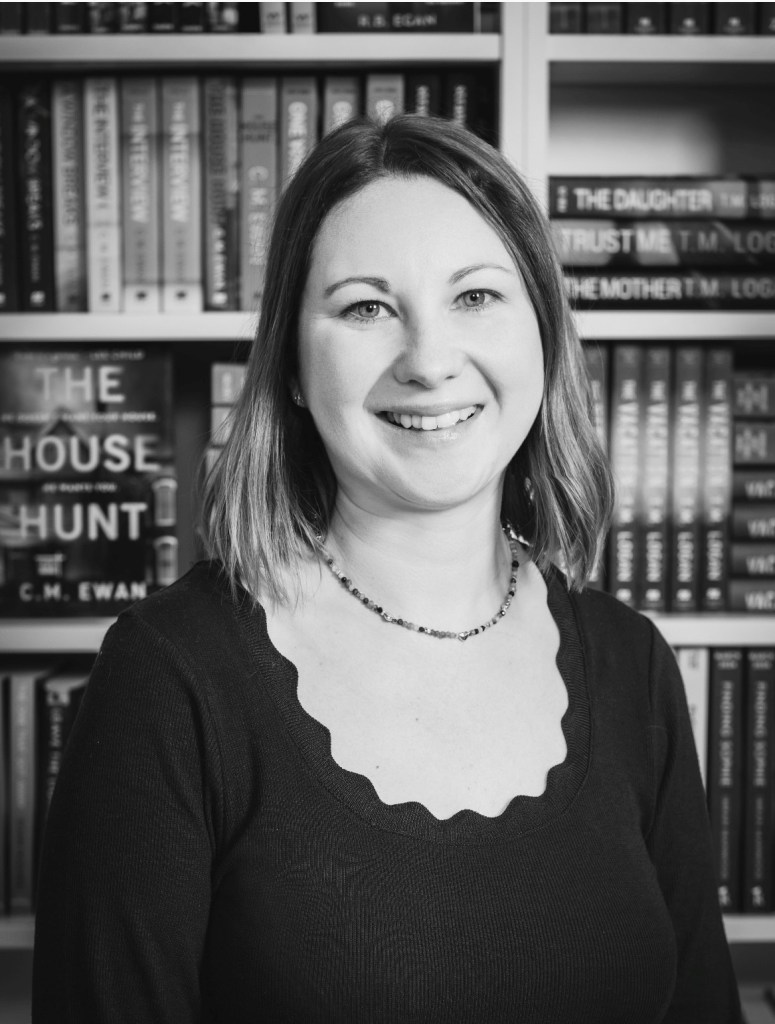
Hi everyone, this morning I’m delighted to welcome Sarah Brooks to the blog. Sarah is a literary agent at Darley Anderson Literary Agency, and first started her career at Little, Brown in the rights team.
Read on for her road into the publishing industry, it’s a fascinating read.
Over to you, Sarah…
1) Did you always want to be a literary agent when you left school? Did you have any other career plans?
I went to an all-girls school, where, to be honest, the career guidance was very limited. My strongest subjects were Music and English, so the options suggested to me were teacher orlibrarian. At eighteen, neither felt quite right, so I decided to study music at university and see where that took me.
2) You studied Music at university, and play piano at Diploma level. What made you decide to make the move into publishing?
I very much stumbled upon my career in publishing. I loved music, but studying it at degree level came with intenseperformance critique that over time began to chip away at my confidence and sadly, some of the joy I’d always felt in playing. By the time I finished my degree, I realised I wanted to keep music as something personal rather than turn it into a career. I’d always been an avid reader and thought publishing sounded interesting, but I assumed it would be impossible to break into without an English or Publishing degree.
However, after a couple of years of working and travelling, I was lucky enough to secure a temporary role doing data entry for the rights team at Little, Brown.
The rights and contracts team at LBUK were absolutely awesome; incredibly supportive in giving me hands on learning experience, fed my love of reading by pressing hundreds of books into my hands (I think I left with three full boxes!), and encouraged me to pursue a career in publishing. I’ve never looked back. And a couple of years later, I independently completed by piano diploma and rekindled my love and confidence in playing – which felt like a happy full circle!
3) Can you describe your experience working as Head of Rights for Hachette Australia and New Zealand?
I was lucky enough to spend three years living and working in Sydney and several more continuing to work for Hachette Australia and New Zealand from the UK. Publishing life in Australia is vibrant, collegiate and there were some amazing funding opportunities provided by Creative Australia that enabled international travel – something of a dream for any rights professional.
I was proud to work with a remarkable range of incredibly talented writers from across ANZ and on acatalogue which spanned non-fiction, fiction and children’s books. Selling so widely across multiple territories, markets and formats was fast-paced and demanding, but the experience I gained with dealing with such a broad and varied workload, was invaluable.
It gave me a great understanding of global publishing relationships, and the confidence to manage and navigate a complex and varied workload.
4) What do you look for in a covering email, from a potential author, sending in their submission?
For me it’s voice, first and foremost. Even in the covering email I’m already listening for a sense of the writer – their energy, their curiosity, the way they see the world. The letters that draw me in are the ones that feel individual rather than formulaic; they give me a glimpse of the person behind the manuscript, their tastes and ambitions.
I love to hear about a writers reading tastes, I feel that often helps me place a voiceand envision where the work might sit. If a covering email doesn’t intrigue me, I’m naturally in less of a hurry to open the pages — when it does, I can’t wait to start reading.
5) If you have rejected a submission, would you ask to see potentially another manuscript from an author?
Absolutely.
There are often submissions where the voice is wonderful and the writer is clearly talented, but the premise doesn’t have the originality or that distinctive spark that I really need to see breakout potential.
In those cases I would absolutely offer to consider another manuscript; however with the gentle caveat that mine is only one opinion and a pass from me, may simply mean that the writer and their work area better fit with another agent.
6) When you decide to take on a new author, what happens after?
The first step is always collaborating to make sure the manuscript is in the very best shape before it goes out to publishers.
Once we’re both happy that it’s ready, I’ll prepare my pitch and submission list and aim to start sharing it with editors who most likely to connect with the work. Timing is also an important factor – we try and be strategic about the publishing calendar, taking into account events such as London and Frankfurt Book Fair, as well as the quieter periods. Sometimes we want to submit ahead of a big event, and other times we use that event to pitch in person and build interest.
Meanwhile, our foreign rights team will be working in parallel with the territories they manage and together we aim to reach as many people as possible to generate those offers.
7) How do you go about the editing process for a novel, pre submitting to publishers?
This varies author to author depending on the manuscript and how much work is needed, and I usually try to be upfront about how much work I envision the book will require during our early conversations — and prior to agreeing representation. It might just be a few small tweaks or we might want to work through a full structural edit together.
I typically start with a second read of the manuscript – this time with an editorial eye rather than purely as a reader. This might result in a structural letter with suggested changes, or a close line edit, or both. I will then share my notes with the author and usually schedule a call so we can chat through my suggestions.
From there we might be ready to submit, or we might feel we want a second or third round to strengthen the story further.
8) Do you have any advice for the unpublished author seeking representation?
• Do your research. Put on your reader hat and think about the kind of books you might compare your manuscript with. Look for agents who are looking for books within the same genre or whose tastes seem to align with the book you are writing.
• Get feedback before you submit widely. Beta readers are invaluable in helping to refine your work and ensure that it’s as strong as possible before you go on submission.
• Remember that reading is subjective; so try not to take rejection personally – just because a manuscript isn’t the right fit for one agent, doesn’t mean it’s not good. It’s simply one step closer to finding the right agent to champion your work.
9) What was the last book you read and did you enjoy it? What, in particular, had you gripped?
I think Kristin Hannah is an incredible author. I recently finished THE GREAT ALONE which broke my heart moretimes than I can count and made me desperate to see Alaska. Hannah writes so evocatively that her books make me want to explore new places, learn more about their histories, and understand the world better.
10) What is a typical weekend for you, and what do you enjoy doing away from your job?
I have two young children, aged four and six so my weekends mostly revolve around their schedules!
We enjoy family walksin the woods around where we live and if we can, we sneak in a little trip to the pub, armed with snacks and games to entertain the little ones. I optimistically take my kindle wherever I go, just in case there’s an opportunity to sneak in a bit of reading on the go, but most often I’ll do this curled up on the sofa once the kids have gone to bed.
Thank you for your time today, Sarah. It has been a pleasure to interview you.
About Sarah: Sarah represents bold, character-driven fiction for the book club and women’s fiction markets, seeking emotionally resonant, plot-driven stories with broad commercial appeal. With 15 years’ experience in rights and licensing—including nine years as Head of Rights for Hachette Australia and New Zealand—she now represents the books she loves to read at Darley Anderson & Associates.
 jsclerkauthor.co.uk