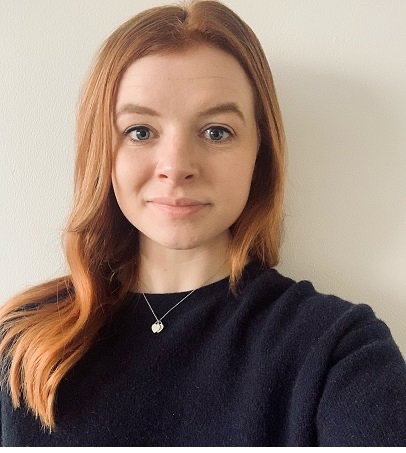
Hi everyone! This afternoon on the blog I’m delighted to welcome Associate Agent Sian Ellis-Martin. Sian is a literary agent with Blake Friedmann and I was delighted when she agreed to join me in conversation about all things books.
Read on for her journey into the industry, her all important advice for unpublished authors and the equally important what she looks for in submissions. A wish list of what she looks for is below the Q&A.
Over to you, Sian…
1) Did you always want to be a literary agent when you left school? Did you have any other career plans?
I’d never even heard of a literary agent, or really knew what I wanted to do, until after university. But once I completed my first internship (at RCW), I knew that I wanted to work in publishing and that the agenting side seemed like a perfect balance of all the different parts of the industry.
2) What does a typical day in the life of a literary agent look like for you?
As an Associate Agent, I have to make sure that I’m finding a balance between the work I do for the authors on my own list, and the assisting I do for other agents at Blake Friedmann.
There’s no typical day as both roles are so varied but some of the main things I do are reading submissions, editing client manuscripts, writing reader reports, checking contracts, sending out books to editors, negotiating deals, meeting editors and/or clients, chasing publishers for material, invoicing for payments, preparing for book fairs and other ad hoc things. Basically, lots of emails!
3) Are there any differences in representing fiction and non fiction books?
When I’m thinking about taking on a non-fiction author, there are things to consider that I might not think so much about with fiction: is the author an expert in the field they’re writing on? Or do they have lived experience of it? Do they have a platform on social media or elsewhere? The answer to these questions doesn’t always have to be ‘yes’, but these points are more important in non-fiction than they are in fiction.
It can usually (though not always) be quicker to get a non-fiction book out on submission to editors; they’ll want to see a proposal and sample chapters rather than a whole book, so the initial editing period and the time it takes for editors to read and consider can be shorter.
4) If you have asked to see a full manuscript, what would make you ultimately say no? Would you ask to see a resubmission at all?
There are many reasons why I might turn down something that originally piqued my interest. Usually for me, it comes down to something quite intangible about how drawn in by the story I am and how well the author maintains that absorption throughout the manuscript. I’ll usually be thinking about potential edits while I’m reading but if my editorial thoughts veer towards completely changing the essence of the book, that usually means it’s just not working for me. Sometimes there are also more practical reasons why I’d say no in the end, like if the story or writing feels to close to something else on my list.
I’ll ask for a resubmission if I love the author’s writing but feel that the story or topic just isn’t the right one at the right time.
5) Once you have offered representation, what is the meeting like with the author, from your perspective?
I usually meet an author before I offer representation; that meeting is a chance for us to see if we’re on the same page in terms of the vision for the book and the editorial work needed. It’s also an opportunity to hear more from the author about their overall goals as a writer, and to consider whether that’s something I can help them achieve or whether there might be another agent better suited. The meeting is a good time to tell the author more about how I work as an agent, how our agency works to sell their rights, and for the author to ask questions.
6) What are you currently looking for from the crime fiction genre? Do you have a particular sub genre that you like?
I really love crime and thriller that makes you think and explores something deeper, beyond the crime itself. NOTES ON AN EXECUTION, for example, really focuses in on the psychology of the killer and THE GOD OF THE WOODS is just as much about family as it is crime. I love a more procedural crime book but it’s hard to break through in that space at the moment.
7) Do you have any advice for the unpublished author seeking representation?
My main bit of advice when setting out to write a book is to keep reading! Having a good knowledge of books that are doing well in your genre will only help you with your own writing.
Try to get feedback from your peers, friends or family before submitting to agents. Sometimes you can get too close to a manuscript, and it helps to have another set of eyes.
When going out on submission, do your research on agents and follow agency submission guidelines. Rejection can be disheartening, but it’s a huge part of being a writer (and unfortunately doesn’t stop once you find an agent!) so be prepared for it and have a plan for how you’ll manage it.
8) What is the process like after you have agreed to sign an author? What happens pre submission to publishers?
After I sign an author, I’ll go through their manuscript or proposal again, putting together editorial suggestions. We’ll work together on the book/proposal until we agree that it’s ready to go on submission to publishers. The editorial stage is one of my favourite parts of my job so I try to be very detailed with my feedback and to be available for whenever someone might get stuck!
While the author is editing, I’m putting together a strategy for submitting to editors, pitching to relevant editors that I meet, and discussing submission plans with my translation and film and television colleagues.
9) What was the last book you read, that wasn’t one of your clients, and what first attracted you to it?
The last book I read was ORDINARY SAINTS by Niamh Ní Mhaoileoin. It was bought for me as a Christmas gift because one of my reading goals for 2026 is to read more queer books. I also love anything Irish and stories that explore religion in modern life/young people, so this book really covered all those bases!
10) Lastly, what is a typical weekend for you? And what do you enjoy doing outside of your job?
A typical weekend for me usually involves spending time with my partner and friends (usually at the pub, a nice restaurant or at a football match), having a little mooch around London (usually on a quest for some sort of delicious pastry or new book) or relaxing at home.
Thank you for your time today, Sian, it has been a pleasure to interview you.
What I’m Looking For:
I represent authors in a range of fiction genres from commercial to the accessible end of the literary spectrum, and I’m also looking to expand the non-fiction side of my list. I’m keen to hear from authors who feel their voice is underrepresented in publishing and it’s important to me to work with authors from a wide variety of backgrounds. I’d particularly love to read more sapphic stories across the board!
Story is key to the books I enjoy; I’m always looking for an element of plot to drive me through a novel. I want to find stories that explore big emotions in touching, memorable or simple ways. In non-fiction I like books that read almost like a story at the same time as educating and informing.
I love a love story, whether it’s a big ‘made-for-each-other’ romance like One Day by David Nicholls, or a quieter depiction of desire like The Safekeep by Yael van der Wouden. I’m also a big fan of rom-coms with interesting backdrops or with a focus on queer love.
Platonic relationships are just as fascinating to me, and I’d really like to represent a sweeping friendship or family saga (think Tom Lake or The Dutch House by Ann Patchett and Pachinko by Min Jin Lee). In this space, it’s really the warmth of the writing that draws me in.
In the commercial crime and thriller space, I want to read truly unputdownable standalone books with twists that you don’t see coming or mysteries that get the cogs of your brain turning. On the more upmarket end of the crime spectrum, I love books that focus on the psychology of the characters at the same time as providing pacey plot, like Notes on an Execution by Danya Kukafka or Three Hours by Rosamund Lupton.
I’ve also been enjoying some dystopian novels like The Compound by Aisling Rawe, I Who Have Never Known Men by Jacqueline Harpman and Station Eleven by Emily St John Mandel. In this space, I like books that don’t feel too far from the world we know and ask questions about how we live and how humans react when pushed to their limits. I’m not so into gun-slinging, action-packed dystopian stories.
I’m a mostly contemporary reader but I do dabble in historical fiction. I’m drawn to books based on real events or people or stories with a gothic or darker feel like Sarah Waters. I also enjoy when historical fiction looks at the lives of people we don’t hear so much about in periods of time that we already know well, like In Memoriam by Alice Winn.
In the non-fiction space, I look for books that read like fiction and/or draw you into a topic you never expected to be interested in (I recently loved The Wager by David Grann). I also enjoy informative books that make complicated topics accessible or shine a light on something new, like Unwell Women by Elinor Cleghorn or Doppelganger by Naomi Klein. I’d love to find a literary true crime story too, like This House of Grief by Helen Garner, and I’m a big fan of untold histories (think The Five by Hallie Rubenhold).
Lastly, I’m on the hunt for cookery and food writing – delicious food and uncomplicated recipes.
In case it’s helpful to know what I don’t represent, I’m not currently taking on YA, children’s, poetry, fantasy, romantasy, science fiction, diet or business projects.
 jsclerkauthor.co.uk