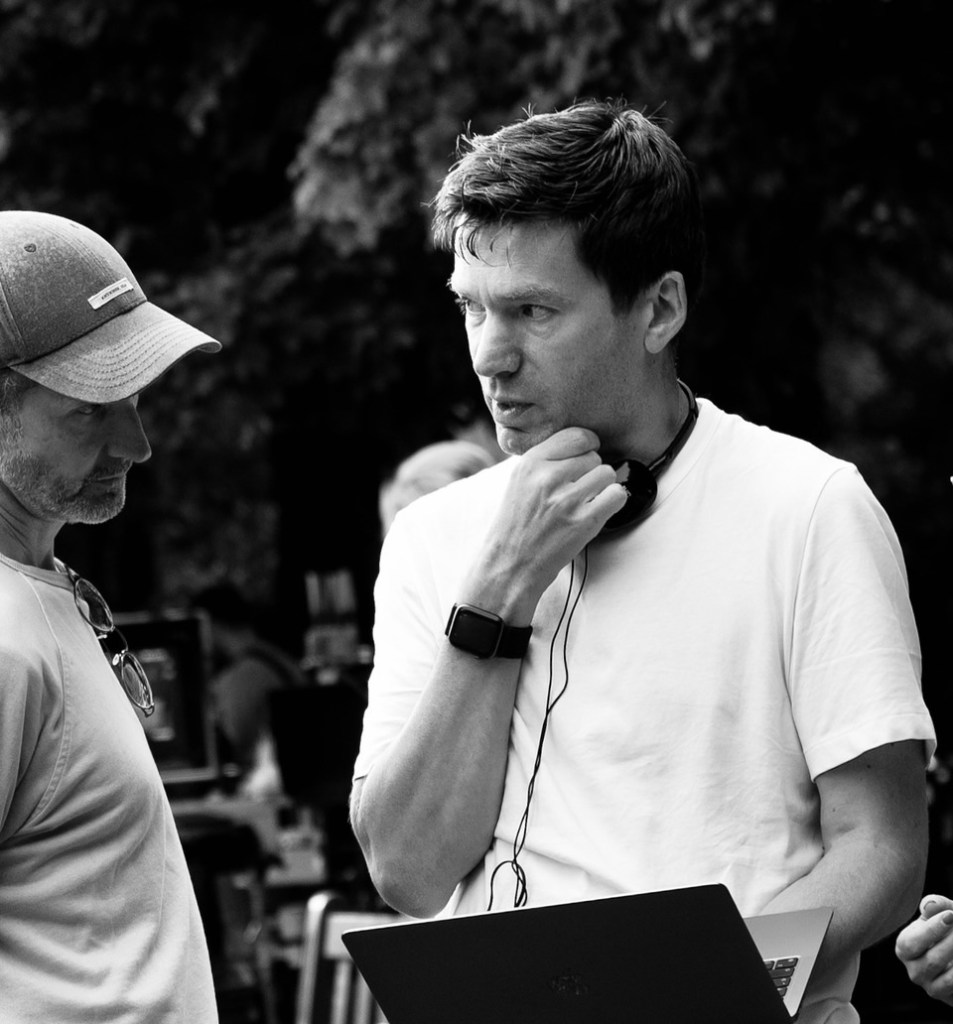
Hi everyone, and this afternoon on the blog, I’m delighted to welcome Jamie Crichton. Jamie is a screenwriter, best known for All Creatures Great and Small, but he has recently written the mini series I Fought the Law, for itv. I was delighted when he agreed to answer a few questions on his road into the industry and what led him to write I Fought the Law.
Over to you, Jamie…
1) Have you always wanted to be a writer? Did you have any other career plans?
I only had a very vague idea; I studied English but didn’t know what I wanted to do, apart from be in the theatre or film world. Somebody I met when I was travelling, needed a pair of hands as a runner – I then tried to make myself indispensable and turned into a development job, which last lasted for seven years. When that company closed, I took a deep breath and gave writing a crack – I wrote my passion project script over six months.
Then there the wilderness years of making a career out of it – all kinds of random jobs. It isn’t the sort of career where it will carry you though. You have to have a sort of plan to make it affordable – whether it be friends or family to support you. As soon as I got a small bit of success, I got a sense of I wanted to make writing work.
2) You studied English and Theatre Studies at university, followed by an MA in contemporary literature and culture. What writing techniques did you learn at university and do you apply them to your writing now?
There wasn’t specifically screenwriting, we did learn exercises which were helpful. We were sent out on a field exercise. We were sent out with a shopping list – two overheard snippets on conversation, two extracts of signs verbatim. We went around the campus and sometimes it’s the most mundane things, that sometimes can carry more meaning. My university tutor also gave the very good advice of if you’re halfway through, and it’s going well, and it’s reached the end of your writing day, try and be disciplined and stop; otherwise it’s much harder the next morning. The momentum you have built will take you through into the next scene.
3) You have written for TV dramas that include Law and Order: UK, All Creatures Great and Small and Ripper Street. What is the scriptwriting process like on a long running TV drama?
It varies from project to project, I Fought the Law I wrote on my own, so every other show I’ve worked on has had some writers room process; we quite often do a hybrid version of a US writersroom – we had three separate one week writers rooms, one was at the very beginning. When I was the lead writer for All Creatures Great and Small, the discussions were about what do we want from series 4? What do we love, what do we hate? We then had another week where we would nail 3, 4, 5 and 6 – this is what the story will be. They were then divided up; once we had all written these scripts, we would come together.
There is the possibility here, of doing more writers rooms. I’ve done a project called Pandora, which was a full sixteen weeks in the writing room. But it was a drawn out process; the idea of it was there. You can get so much more achieved, if you are with other people. It is collaborative, to help you, and especially with crime, you might have an editing issue that needs solving and someone will help you make it better. That way of working can be really really productive. You know you are doing one or two episodes, but it is an interesting way to progress the story.
4) Before you start writing a script, what does your planning process look like? Are you a character led writer, as in they arrive fully formed in your mind or does plot come first for you? Does the process differ to writing with a team?
It varies from project to project, I love a whiteboard. I create a little bit of space, so I try and figure out what an episode will look like. I Fought the Law was always going to be four parts – what is the story of each episode? How do I tell a crime legal story through one mother’s perspective? I do think there is truth in the idea that consciously or unconsciously, we respond to certain waypoints in a story that make it interesting to us – either an inciting incident. You then have an all is lost moment. If I’m doing an episode or a mini series, I have to defend it and then pitch it as it does have those beat moments.
I do feel that you should be able to do a longline pitch – this is the story, this is the hook, this is the obstacle, this is the resolution. As cynical as I am about Robert McKee, those storytelling points are – you always have to hook the viewer to keep them watching. I try and build those adverts in to keep the viewer interested.
5) Your drama I Fought The Law has recently been screened on itv1. What was your research process through the initial early stages of the project? How did you manage to condense a 17 year fight for justice into four hours of screen time?
The research process is linked to the development process. Back in 2020, I was finishing a show and the pandemic hit; I didn’t have a job lined up. I watched Quiz with Matthew MacFadyen – it wasn’t what I expected it to be. It wasn’t harrowing or traumatic. You can tell a true crime story that doesn’t make you feel traumatised. I was looking for true crime with a twist. Googling didn’t bring up a mass but then my brother sent me a link about crimes that changed the law – one of them was Ann Ming’s. I wasn’t looking for murder stories, but this was different.
I found it inspirational; it was exactly the kind of thing I was looking for. I put it in a treatment and sent it to Liza Marshall. Ann Ming’s book had already been optioned by another company. Liza wasn’t put off and told me she had the rights. She had convinced them to give them to us – we pitched it and they loved it. The book was such a significant springboard – almost all of the book was what you saw on the telly. But it was about what to omit, rather than include. Some parts we had to cut and condense – a random example was where Ann went to Jack Straw and there was a reshuffle – so Ann had to go through another home secretary David Blunkett. So we had to drop that scene and condense it.
Your writing needs to move into new territory; 99 times out of 100 a real life story will not hit those dramatic milestones. It didn’t fit that story structure, so we had to stay true to the real people and real events. It is less important that you crowbar a story structure into real life – there has to be a shape to it, even if it’s real life. What makes story work in a theoretical way.
6) Following on from the above, why was it important to you that Ann was the central character, as opposed to the focus on the police investigating the crime? And did you feel that there was a responsibility with the nature of the subject matter?
For me, it wasn’t just the fact that Ann was the interesting part – she wasn’t a superhero wearing a cape. She had no legal training, so it was quite easy to go we will make the narrative from her perspective. In the world of a procedural story, when you begin with a missing person, we are so used to the police perspective – suspects and that’s where all the dynamics are. If we’re with Ann the whole time, you can’t have a police officer explain in a bit of dialogue how the case progressed.
Once I had committed to making Ann the central character, this story is how a mother deals with that. She wasn’t told all of the information firsthand; reverting back to an earlier answer, the shopping list idea taught me constraints – you have to write something that follows these things, it weirdly makes it more interesting and frees your creative brain rather than constrains it. If you have to tell a true crime story, but not allowed to follow the police, but it has to be realistic, for me, this was liberating. It feels different and fresh; it was Ann’s story.
7) What is next project wise for you? Can you tell me anything about any works in the pipeline?
The short answer is no, I’m not being secretive, hopefully that this has done well and people have really liked it. I have true stories in a similar space, having an ongoing portfolio of ideas is helpful. As much as you can, keep a portfolio of other idea to fall back on. For an author, an agent might go can you send me the rest of your book?
8) Lastly, what do you do to relax? What do you enjoy doing away from your job?
I feel very lucky in that the thing I do for my job I love, there is a rollercoaster to being freelance. I like running, hiking and walking the dog, Coco. I like to travel as much as I can; I have a 15 year old, and we do a lot of family stuff.
Thank you for your time today, Jamie. It has been a pleasure to interview you.
 jsclerkauthor.co.uk